
Guide 4 of 5 · 한국 생활
Life in Korea
The practical things for your first weeks: a bank account, a transit card, where the rubbish goes, and what a month costs.

01 of 8
Monthly essentials
한국 생활 필수정보
- Housing
- 300k-700k KRWDorm or gosiwon per month. A studio is 500k-1.1M KRW, more in Seoul.
- Transportation
- 55k-90k KRWPer month for regular bus and subway commuting with T-money.
- Mobile phone
- 30k-50k KRWPer month, prepaid or contract SIM. Needed for banking and deliveries.
- Health insurance
- about 76,000 KRWPer month. Mandatory for all international students.
02 of 8
Opening a bank account
은행계좌 개설
Open an account with your passport and ARC for tuition and rent. For example Kwangju Bank or Nonghyup.
- 1
Limited account한도계좌
Passport, ARC, certificate of enrollment and proof of residence in Korea. Daily withdrawal and transfer limits may apply depending on the bank.
- 2
Purpose-based account금융목적거래 계좌
Passport, ARC, certificate of enrollment, proof of residence, your labor contract and a copy of the business registration certificate.
03 of 8
T-money transit card
티머니
- 1
What it is
A transportation card used all over Korea.
- 2
Buy and recharge
At convenience stores (CU, GS25, 7-Eleven, emart24) and subway stations. Recharge at convenience stores and subway ticket machines.
- 3
Where to use it
Buses, subways, taxis and some shops. Faster than cash, with discounted fares. Keep some balance on it before you travel.
04 of 8
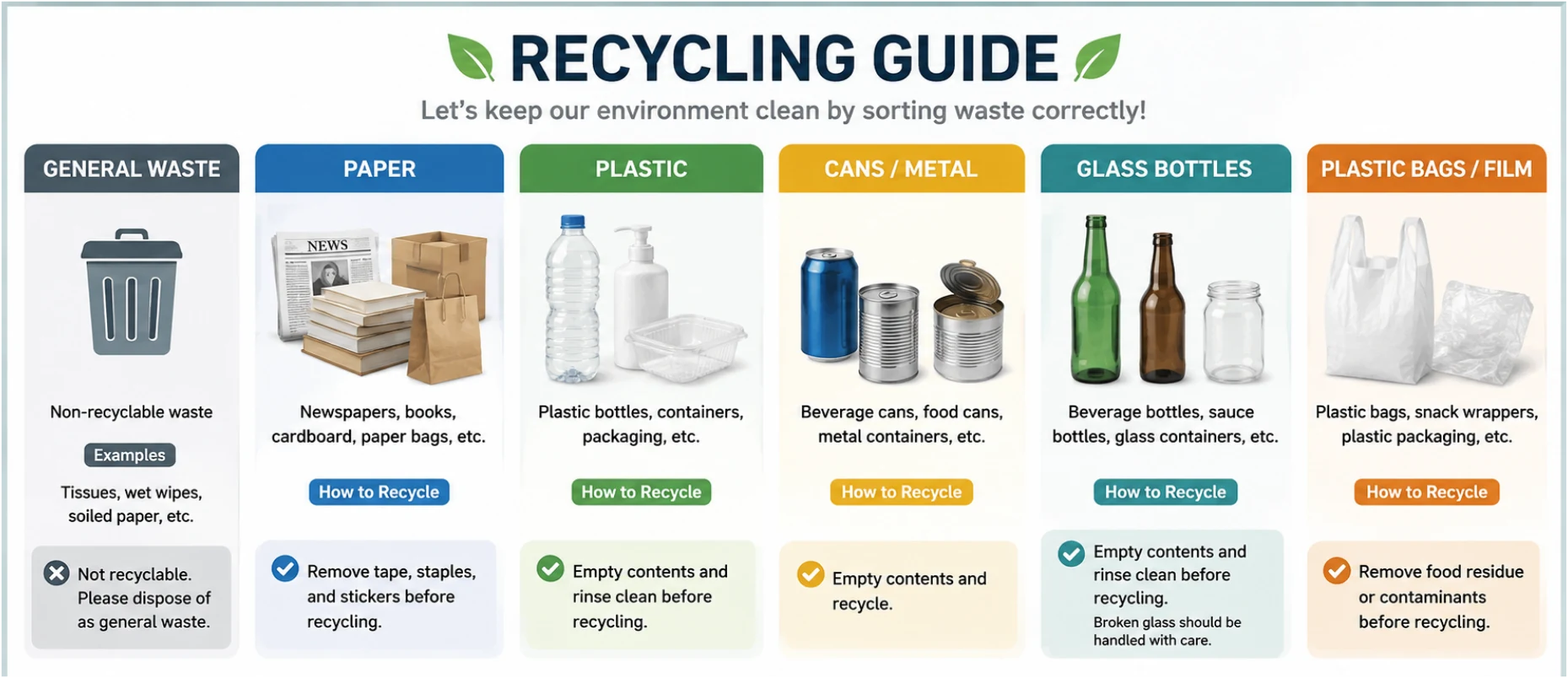
Recycling
분리배출
Four rules for everything you throw away.
Emptyit
Nothing left inside.
Rinseit
Wash off any residue.
Sortit
Separate by recycling category.
Separateit
Do not mix different types.
05 of 8
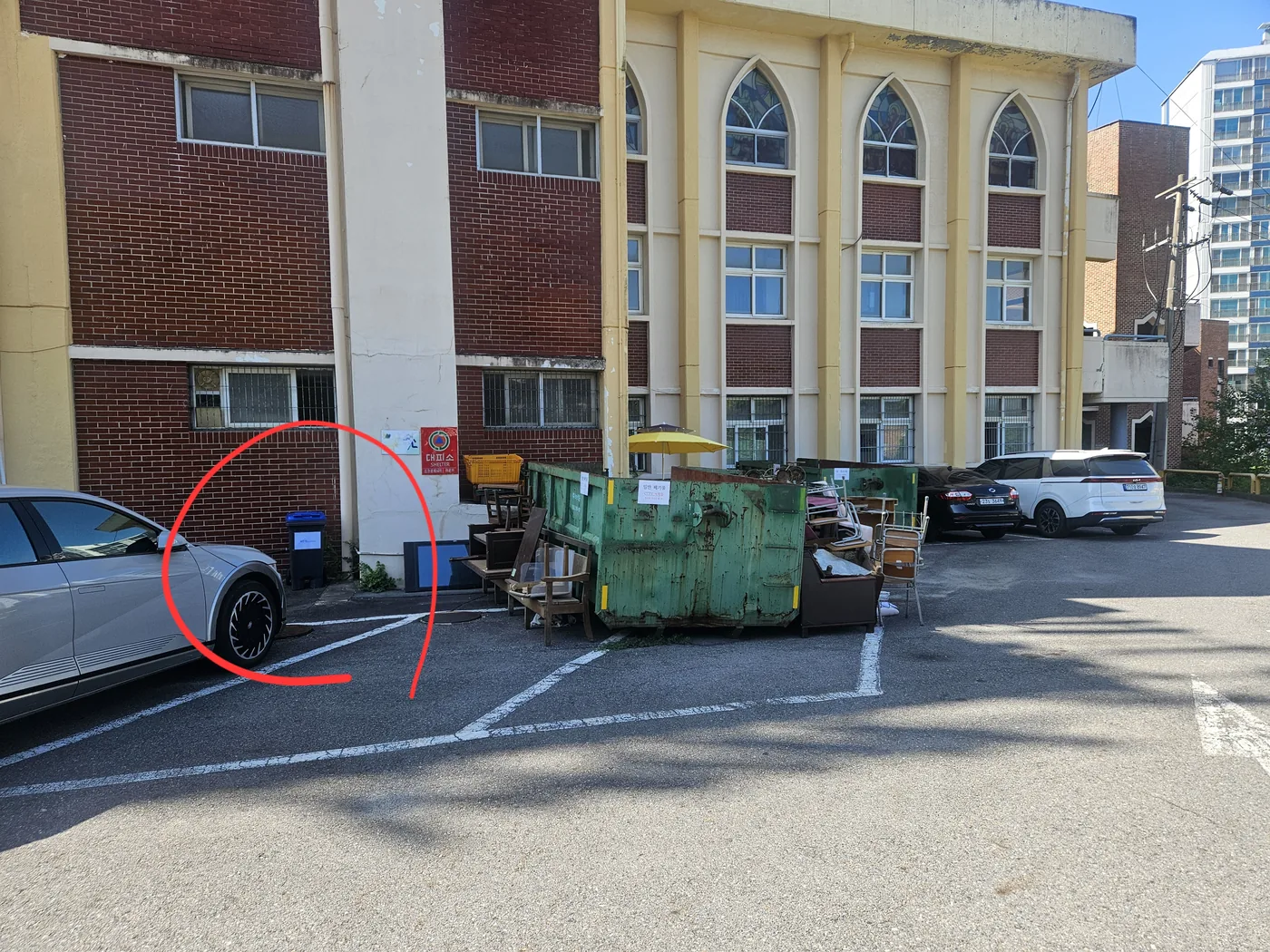
Food waste
음식물쓰레기
Food waste
- Fruit peels such as apple, pear and tangerine
- Vegetable peels and leaves
- Rice, bread, noodles and cookies
- Fish and meat without bones (small bones are fine)
General waste, not food waste
- Bones, nutshells, plum pits and corn cobs
- Soups, stews and other liquids
- Oily or greasy leftovers
- Eggshells, shellfish shells, fish bones and tea leaves
06 of 8
National Health Insurance
국민건강보험
Every student on a D-2, D-4, or F-4 (if enrolled as a student) visa must be enrolled in the National Health Insurance Service.
Take note
If you do not pay the premium
You may lose NHIS coverage at hospitals and clinics, and your immigration applications and residence permit reviews may be restricted.
Good to know
Details to follow
Detailed health insurance guidelines will be announced once NHIS confirms them.
07 of 8
Tuition and money
학비·금융
- 1
Tuition payment
Pay according to the university invoice and deadline. Late payment can block registration and affect your visa.
- 2
Invoices
Check the student portal for tuition invoices and note the exact due date each semester.
- 3
Bank balance certificate
Visa extension and some university processes require one, often around 16,000,000 KRW for one year.
- 4
Refunds
Refunds depend on when you withdraw. Contact the finance office early if your plans change.
08 of 8
Staying informed
학생 소통채널
- 1
Join the official groups
Join the university KakaoTalk, WhatsApp and LMS groups for your department and for international students.
- 2
Read university announcements
They are the source for the calendar, exams, tuition and policy changes. Check the LMS and email every day.
- 3
Contact staff properly
Use official email, office hours or the international office desk. Keep messages clear and polite.
- 4
Keep records
Save important emails and screenshots. They help if questions come up later with immigration or the university.
Take note
Avoid misinformation
Do not rely only on student group chats for visa or academic rules. Check with the international office.